


May 21 2025 | Dr. Nguyen Trung Nam (Tony Nguyen) – Founding Partner; Pham Hong Lien – Trainee Associate | Lexology
I. North – South High-Speed Railway Project: Project Introduction and FEED Approach Framework:
1. Project Overview:
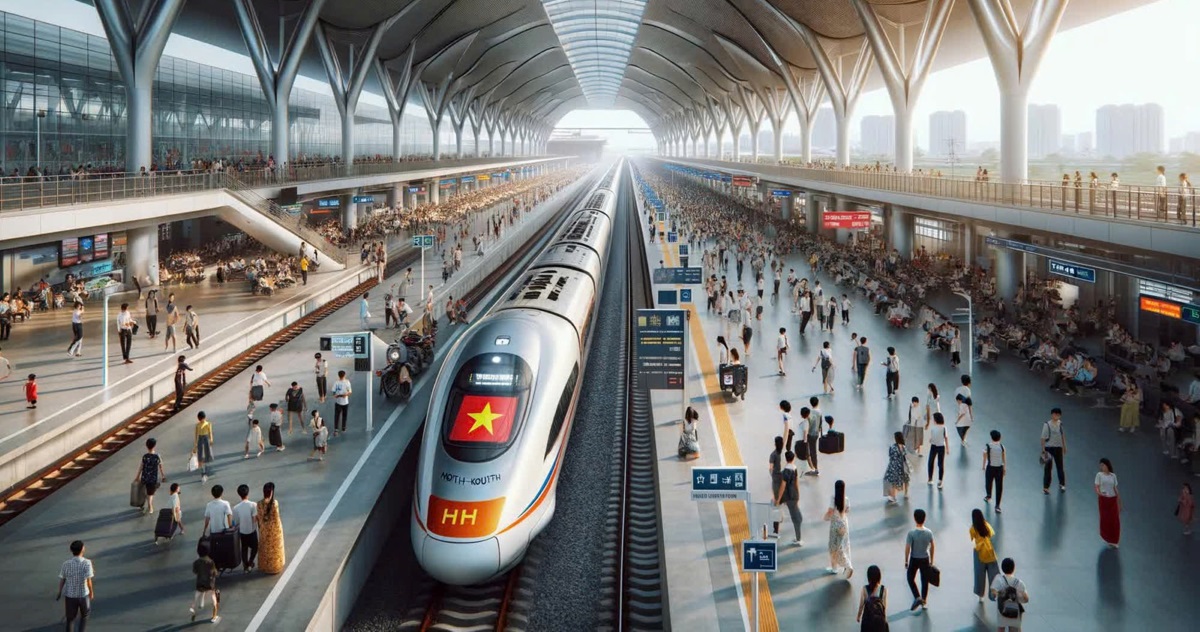
The North – South High-Speed Railway Project is not merely a transportation infrastructure endeavor but also a symbol of Vietnam’s aspiration to elevate its standing. Expected to become the backbone of the national transportation system, this modern, international-standard railway line promises to bring about a revolution in transportation, promoting comprehensive and sustainable socio-economic growth. The project will address the pressing issue of transport capacity, meet the increasing travel demands of people and businesses, and significantly shorten travel time between major economic hubs. The project has a very large scale with a length of 1,541 km, connecting Hanoi and Ho Chi Minh City, passing through 20 provinces and cities. The double-track line with a gauge of 1,435 mm, a design speed of 350 km/h, includes 23 passenger stations and 5 freight stations, serving both passenger and freight transport, as well as national defense purposes. The total initial investment is approximately 1.7 trillion VND (67 billion USD).
Furthermore, the North – South High-Speed Railway will also establish a new economic corridor, opening up opportunities for inter-regional connectivity from North to South, facilitating trade, tourism, and investment. The project is expected to attract investment to localities along the route, create numerous jobs, improve the quality of life, and become a powerful driving force for the development of the nation as a whole.
In striving for this aspiration, Vietnam faces significant challenges regarding investment capital, advanced technology, and environmental protection. Effective project management is a crucial factor determining success. This large-scale and complex project demands a rigorous, transparent, and high-risk control management approach to avoid delays, budget overruns, or failure.
Considering this background, FEED (Front-End Engineering Design) is a sagacious choice. FEED helps clearly define the project scope, thoroughly assess technical, financial, and environmental aspects, enabling accurate investment decisions and minimizing risks during implementation. Applying FEED ensures the project is carried out methodically, scientifically, and efficiently, contributing to the realization of the vision for a modern transportation system and promoting Vietnam’s socio-economic development.
2. The Legal Framework of Vietnam Applicable to FEED
Although the amended Law on Construction 2020 and Decree 15/2021/ND-CP do not mandate the compulsory application of FEED for all projects, the additional regulations and definitions have strongly encouraged the adoption of this method, especially for projects with complex technical characteristics, high technology, and large scale similar to the North – South High-Speed Railway. The recognition of FEED through the definition of “Front-End Engineering Design (FEED)” in the law (Clause 11, Article 3 of Decree No. 15/2021/ND-CP [1]detailing certain contents on the Management of Construction Investment Projects) demonstrates the acknowledged important role of this method in project management, encouraging investors to consider applying FEED as an effective tool. The law also provides for multi-stage design implementation, creating a clear legal basis for applying FEED in projects requiring high technical expertise, thereby ensuring quality and efficiency. Notably, the reference to “according to international practice” in the FEED definition not only helps Vietnam integrate with advanced management standards but also encourages the adoption of proven effective methods for large-scale projects. Regulations on design appraisal and cost management both emphasize accuracy and efficiency, indicating that the application of FEED is an effective measure to achieve these goal. In summary, despite its non-mandatory nature, the inclusion of regulations related to FEED has created a favorable legal framework, demonstrating a clear encouragement for the adoption of this method for complex projects, showing that the state has recognized the potential benefits of FEED in enhancing management efficiency and project quality
II. Insights from International Large-scale Project Management
1. Implementing FEED Across Industries
The FEED phase plays a pivotal role and is widely applied across various industries, particularly the Oil and Gas sector, where offshore drilling platforms, refineries, petrochemical plants, and gas pipelines often undergo a very detailed FEED stage. For instance, the Sakhalin-II project in Russia utilized FEED to determine the configuration and technology for its LNG plant, and the Ichthys LNG project in Australia optimized its offshore and onshore infrastructure design thanks to FEED. The application of FEED is highly valued in the chemical industry in the construction of new plants or expansions to ensure safety, efficiency, and regulatory compliance. In the energy sector, power plant projects, particularly complex projects like nuclear power or Carbon Capture and Storage (CCS), often implement FEED to optimize performance and ensure safety. Application of FEED also extends to the large-scale mining industry to strategically plan efficient and sustainable mineral extraction, processing, and transportation. While not as prevalent as in the aforementioned sectors, certain major and intricate infrastructure projects, such as airports, seaports, or urban railway systems, may also see elements of the FEED process employed to meticulously define technical requirements, rigorously analyze alternatives, and proactively manage risks. In essence, FEED is a pivotal stage employed to empower investors to make judicious decisions, substantially mitigate risks, and ultimately ensure the successful realization of their ambitious and complex undertakings.
2. Implementing FEED in the Railway Industry:
Experience from leading countries globally in the high-speed rail sector reveals that leading nations such as Japan, France, and Spain all place significant emphasis on the preliminary engineering design phase, a step analogous to FEED, and consider it a pivotal element for success. In Japan, a comprehensive and meticulous design process prior to construction has laid a solid foundation for the renowned Shinkansen system, known for its safety and efficiency. Similarly, France has invested considerably in early detailed studies and designs for its extensive TGV network, aiming to optimize routes, select appropriate technologies, and minimize construction risks. These invaluable lessons from these countries underscore that allocating adequate time and resources to the pre-construction phase, including clearly defining technical requirements, assessing environmental impacts, and undertaking detailed planning, is a decisive factor in ensuring the technical, schedule, and cost success of large-scale high-speed rail projects.
Studying the case of the United Kingdom, two major high-speed rail projects, HS1 (High Speed 1, also known as the Channel Tunnel Rail Link, which successfully established a crucial connection between London and the European high-speed rail network via the Channel Tunnel) and HS2 (High Speed 2, designed to connect major cities in the North and South of England, fostering economic growth and reducing regional disparities), offer valuable lessons regarding the critical importance of thoroughly applying FEED principles. HS1, despite initially encountering budget overruns and delays, but largely due to meticulous technical preparation and initial design, became a successful high-speed rail line, efficiently linking London with the European rail network and yielding significant economic and social benefits. Conversely, HS2 is currently grappling with substantial challenges concerning costs, schedules, and public opposition, which can be partly attributed to a potentially insufficient emphasis and investment in the pre-project phase, akin to FEED. The scaling down of the project further raises doubts about the feasibility of achieving its original benefits. Drawing upon the successful experiences of Japan, France, Spain, and HS1, alongside the challenges currently faced by HS2, the critical importance of a rigorous and comprehensive preliminary engineering design process (analogous to FEED) becomes unequivocally evident. Despite potential variations in approach and terminology, committing significant time and effort to thorough research in this phase serves as the bedrock for ensuring the long-term success of large-scale high-speed rail projects
III. Implementing FEED for the North – South High-Speed Railway Project Management:
1. Why FEED Should Be Applied to the North – South High-Speed Railway Project Management
FEED assumes a pivotal role, yielding substantial benefits for all stakeholders involved in construction projects. As evidenced by successful projects documented by Assai Software and Rockwell Automation, the expenditure allocated to FEED typically constitutes a mere 2% of the total initial capital investment. Nevertheless, this crucial phase furnishes a comprehensive and lucid overview of the project’s scope, technical requisites, technology, and financial parameters, thereby empowering project owners to make sound decisions, generate accurate cost estimations, and proactively mitigate potential risks. Consequently, FEED optimizes the design, facilitates the selection of optimal technical solutions, minimizes errors from the outset, and enhances synchronization across various project components, ultimately unlocking the potential for savings in construction and operational costs that can reach up to 30%.
Furthermore, a detailed FEED documentation lays a solid groundwork for contractors to plan construction efficiently, shorten execution timelines, and improve workplace safety. Notably, a comprehensive FEED package significantly boosts the project’s appeal to potential investors, opening doors for more effective capital acquisition.
Nonetheless, implementing FEED also presents certain challenges. The initial costs for this phase can be considerable, and the execution process might extend, potentially affecting the overall project schedule. The FEED phase necessitates a team of highly skilled engineers, which can increase personnel expenses. Moreover, altering the design after FEED completion can lead to substantial cost increases, and price fluctuations during this stage also require careful attention. Effective management of FEED projects demands close collaboration and professional expertise. However, these limitations can be effectively handled and lessened through meticulous planning and selecting reputable FEED consultants, thereby maximizing the benefits this crucial design phase offers, especially its significant cost-saving potential.
2. Implementing the FEED Process: The Steps Involved:
The FEED process is not a singular step but rather a sequence of interconnected and progressive activities aimed at defining the project in detail before embarking on the costly construction phase. The three main steps typically referenced are:
- Conceptual Design: This is the initial phase of FEED, focusing on defining the overall picture of the project. For railway projects, this includes outlining the route (alignment, length, terrain factors), the location and scale of stations, the depot (train maintenance and management facility), core technical systems such as power (energy supply for trains and systems), signaling and communication (ensuring safety and operational control), along with auxiliary works (internal access roads, drainage systems, etc.).
The crucial point of this phase is to evaluate feasible technical options. For example, there might be multiple choices for the route alignment, different electrification technologies, or various signaling and communication solutions. Selecting the optimal option requires careful consideration of technical factors (feasibility, efficiency), economic factors (investment, operation, and maintenance costs), and social factors (impact on the community and environment). This phase lays the foundation for the entire project, and incorrect decisions at this stage can lead to serious consequences later on.
- Detailed Engineering Design Basis: Following the selection of the optimal solution, this phase elaborates on specifying the detailed technical requirements for each component of the project. This includes defining the materials to be used (types, quality standards), the applicable technical standards (e.g., railway industry standards, international standards), the anticipated construction procedures (methods, quality assurance measures), and the quality and safety requirements (inspection criteria, safety supervision procedures).
This phase establishes a detailed “rulebook” for the subsequent phases, especially the construction phase. The more detailed and clear the technical specifications are, the more ambiguity, disputes, and errors during implementation can be minimized. This serves as the foundation to ensure that all stakeholders have a clear understanding of what needs to be achieved.
- Technical and Economic Feasibility Study: This phase is comprehensive and evaluative in nature. Technical feasibility assesses whether the chosen design solutions are truly viable from a technological standpoint and can be implemented under real-world conditions. Detailed and accurate estimations of investment and operational costs are carried out based on the defined technical specifications. Finally, the economic and financial efficiency analysis of the project (e.g., payback period, internal rate of return) will facilitate the investor and potential stakeholders in evaluating the attractiveness and sustainability of the project.
The outcome of this phase is a comprehensive report, providing a solid foundation for making the final decision on whether or not to proceed with the project implementation. If the feasibility study indicates that the project is not technically viable or economically inefficient, stopping at this stage will help save significant costs in the future.
2. The Role of FEED in the Following Phases:
FEED is not limited to design, it also plays a pivotal role in leading and directing the subsequent project phases:
- EPC Contractor Selection: The FEED dossier serves as the guiding principle for the tendering process. It provides the scope of work (what the contractor must execute) and detailed technical requirements (standards, quality). The FEED dossier provides EPC contractors with a clear insight into the project’s scale and complexity, thereby developing competitive and accurate bids. A complete and clear FEED dossier will help the investor compare bids effectively and select the most suitable contractor in terms of capability and price.
- Drafting the EPC Contract: The FEED dossier becomes an integral part of the EPC contract. It clearly stipulates the responsibilities of the respective parties (the investor and the contractor), the technical standards to be adhered to, and the payment terms based on the progress and quality of work. Integrating the FEED into the contract helps avoid potential misunderstandings and disputes during project execution, ensuring the commitment and accountability of involved parties.
- Project Management and Change Management: FEED provides a crucial reference basis throughout the project implementation process. Any deviations from the original FEED design (e.g., changes in materials, construction methods, or even the scope of work) must be thoroughly evaluated for their impact on the project cost, schedule, and quality. Having a detailed FEED design gives the investor a basis to assess the reasonableness of changes proposed by the contractor and make effective management decisions, avoiding unnecessary changes that lead to cost overruns and prolonged construction timelines.
3. Insights into Contractor Selection Based on FEED:
Beyond being a technical document, FEED serves as a vital instrument for assessing and choosing the right contractor:
- Evaluating Capability and Experience: The investor needs to utilize the FEED dossier to thoroughly assess the technical capabilities of potential contractors. This includes reviewing their experience in executing similar projects in terms of scale and complexity, as well as their project management capabilities (experience managing large projects, personnel team, quality management system). The FEED dossier enables the investor to establish specific and objective evaluation criteria.
- Analyzing Technical and Financial Bid Proposals: Contractor bid proposals are not only evaluated based on economic value but also on their adherence to the technical requirements stipulated in the FEED dossier. A contractor with a bid proposal with a low price who does not meet the technical standards can pose significant risks to the project. Therefore, a balance is needed between financial competitiveness and the contractor’s ability to meet the technical requirements.
- Contract Negotiation: The FEED dossier is the foundational document for the contract negotiation process. It helps ensure that both the investor and the contractor have a unified understanding of the scope of work, technical requirements, execution schedule, and other contract terms. Referencing the FEED during negotiation helps avoid future conflicts and misunderstandings, ensuring a clear and transparent contract.
4. FEED and Managing Changes: A Key to Success for High-Speed Railway Projects:
The Implementation of FEED for large-scale projects such as the North-South high-speed railway, while offering numerous benefits, inevitably faces inevitable modifications. To maximize the potential of FEED and effectively control changes, establishing a robust contractual framework and a transparent change management process is absolutely essential.
Specifically, the implementation of FEED in the North-South high-speed railway project needs to be reinforced by contractual clauses that bind the involved parties to strictly adhere to the outcomes and processes of FEED. The scope of work, technical requirements, quality standards, and timelines defined in FEED will become a solid legal basis for the implementation process.
However, high-speed railways frequently encounter unforeseen factors such as geological variations, new technical requirements, fluctuations in material prices, or force majeure events. The contract needs to clearly stipulate that any deviations from the original FEED dossier must undergo a thorough review, a comprehensive impact assessment (on cost, schedule, and technical aspects), and be approved according to the agreed-upon change management process. This process should clearly define the authority to propose changes, the detailed evaluation and approval steps, as well as the methods for recording and managing approved changes.
To ensure the accuracy of technical information, EPC contractors need to be responsible for reviewing and reconfirming the entire content of the FEED dossier before commencing construction. This helps them fully understand the scope of work, clearly comprehend the specific technical requirements, and identify potential risks, thereby developing appropriate technical proposals and bids, while also minimizing disputes arising from differences in the interpretation of FEED information.
In conclusion, the application of FEED for the North-South high-speed railway project is not just about conducting a thorough initial design phase. To achieve maximum effectiveness and minimize risks, it is necessary to build a robust contractual system that binds adherence to FEED outcomes, while also establishing a transparent and effective change management process, along with requiring EPC contractors to proactively confirm FEED information before implementation. These are key factors to ensure the project stays on track and achieves its objectives.
1, Clause 11, Article 3 of Decree No. 15/2021/ND-CP: “Front-End Engineering Design (FEED) is a design phase carried out according to international practice for projects with technological design after the construction investment project is approved to specify the requirements for the technological process, technical parameters of the main equipment and materials used, and construction solutions. The results of FEED are used to prepare bidding documents under EPC contracts or to meet specific requirements for the implementation of subsequent design phases
Source: Insights from feed and recommendations for the north-south high-speed railway project – Lexology